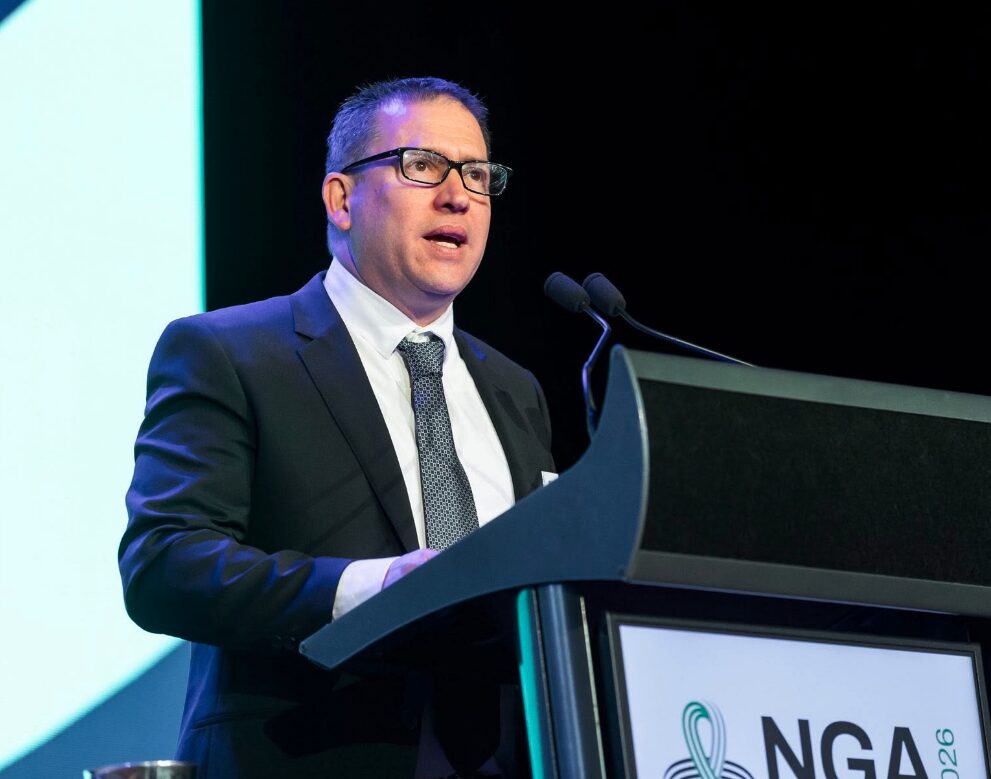
Australian Local Government Association (ALGA) President and Gladstone Mayor, Matt Burnett has taken the call for a fairer and more sustainable funding deal for councils directly to Federal Parliament.
Appearing before the House of Representatives Standing Committee inquiry into the financial sustainability of local government, President Burnett said the halving of value of Financial Assistance Grants as a share of national taxation over the past 30 years, from 1% in 1996 to just 0.49% in 2026-27, increased the urgency of the call for fairer funding.
The appearance follows last week’s joint letter to the Australian Parliament, signed by ALGA and every state and territory local government association, calling for a fairer deal for the nation’s 538 councils.
The letter was tabled with the Speaker and makes clear that councils are facing growing responsibilities, escalating costs and increasing expectations from communities, without the revenue base needed to keep pace.
President Burnett said ALGA was delivering a consistent message to Canberra on behalf of Australia’s councils.
“Local government delivers the services and infrastructure communities rely on every day, but the financial pressures are becoming harder to absorb,” he said.
“This is not a new concern, and it is not confined to one part of Australia. Councils in cities, regional centres, rural communities and remote areas are all feeling the effects of cost shifting, ageing infrastructure, disaster impacts and growing demand for local services.
“We have put that message in writing to the Australian Parliament, we have taken it to the Speaker, we raised it at our National General Assembly, and today we put it directly before the Financial Sustainability Inquiry.
“The message is straightforward: local government needs fairer funding to keep delivering for Australian communities.”
The urgency of the issue was reinforced last week with the release of ALGA’s 2026 National State of the Assets Report, which found councils face up to $280 billion in infrastructure renewal and upgrade demand over coming decades.
The report found assets in poor to very poor condition represented a replacement task of between $65 billion and $68 billion nationally, while assets currently assessed as fair represent a further $173 billion to $212 billion in future renewal and upgrade demand.
President Burnett said the report demonstrated why councils needed sustainable funding arrangements, not short-term fixes.
“Councils manage essential local roads, bridges, drainage, community facilities, parks and public spaces that underpin everyday life and national productivity,” he said.
“But they can’t meet the scale of this renewal challenge alone, particularly when they are also being asked to support housing growth, respond to disasters and maintain the services communities depend on.”
He said disaster recovery funding was a further and increasingly urgent example of the pressures facing councils.
“Councils are on the frontline from the first hours of a disaster, clearing roads, restoring essential infrastructure and helping communities recover.”
“We are now seeing serious concerns from councils about proposed changes to disaster recovery funding. Reforms should not see any council go backwards as a result of changes intended to improve the system.”
President Burnett said local government was seeking a constructive partnership with the Federal Government to ensure councils could continue supporting national priorities while meeting the everyday needs of their communities.
“Councils are ready to work with the Federal Government on housing, productivity, resilience, roads, disaster recovery and stronger communities.”
“But that partnership must be matched with funding arrangements that recognise the scale of the task,” he said.
ALGA President takes call for fairer funding to Federal Parliament