
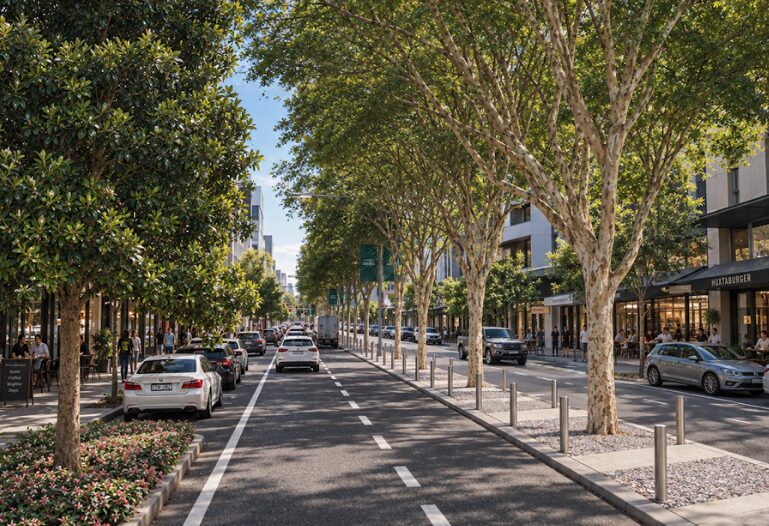
A template to transform the old Pacific Highway through Coffs Harbour into a leafy boulevard has been placed on public exhibition by City of Coffs Harbour Council.
The 10.2km stretch of highway that the Council says will be renamed Solitary Islands Way with the opening of the Coffs Harbour Bypass has been the subject of an intense express design process known as a ‘charrette’ for stakeholders.
As a result, a draft vision has been released that would see considerable tree-plantings, including large canopy trees in the centre median strip where space permits, additional parkland space and the closure of some slipway roads, a reduced speed limit of possibly 40 kilometres per hour from Combine to Coff streets, and a dedicated on-road cycleway between Coff and Orlando streets to link the City Centre and Park Beach Plaza.
The draft City Spine Renewal Design Guide also includes colour palette options and treatments for street furniture and paved areas, plus a range of vegetation options.
“The charrette process showed a high degree of alignment for using trees to beautify the road, and to maintain adequate parking capacity,” said Mayor, Nikki Williams.
“While traffic volume on the old highway will lessen with the opening of the Bypass, the road will remain an important transport connector so function for that purpose also needs to be factored in.”
The draft design guide suggests options such as distinctive leopard trees or tallowwoods or brushbox as candidates for median strip large plantings, and smaller species for verge side plantings.
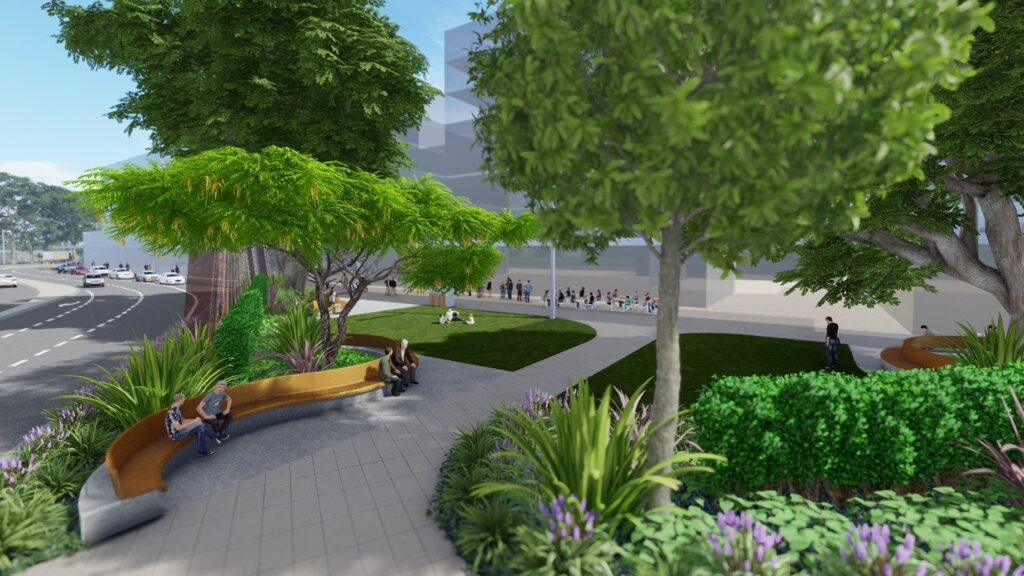
The design guide also looks at ‘entry statements’ on the northern and southern approaches as a means of re-establishing the City Centre as the civic and commercial heart of the city. These gateways (at the Patrick Burke Park corner at the south and at Coff St at the north) will signal to motorists, cyclists and pedestrians they are entering a distinct destination rather than simply travelling along a former highway corridor.
These visual statements need to reflect Coffs Harbour’s subtropical landscape, cultural identity, local pride and renewed City Centre character, the Council said in a statement.
The initial focus of the transformation (‘Stage 1’) will be on the stretch of the old highway from the Combine/Albany Street intersection to Coff Street.
“The estimated total capital cost of the Stage 1 works is put at $19.6 million and we’ll be looking to NSW and Federal government grants for support as we reposition the City for a post-Bypass world,” said City Planning and Communities Director, Ian Fitzgibbon.
“The bypassing of Coffs Harbour will be a game-changer. As a major Australian regional city it’s in every government’s interests for us to thrive as a key destination on the Eastern Seaboard.”
Consultants, King and Campbell, developed the streetscape design guidelines and detailed concept design in collaboration with the Council and Transport for NSW through design processes with the City’s Highway Bypass Integration Committee, the City Centre Masterplan Committee, and the Destination Coffs Coast Committee.
“The draft guide outlines a vision to transform the corridor from a vehicle-dominated transport route into a connected network of streets, public spaces and landscapes which support walking, cycling, local businesses, community activity, economic vitality and environmental resilience,” Mr Fitzgibbon said.
“The design charrette showed there was broad support for a greener, safer and more pedestrian-friendly city centre that enhances place, amenity and economic activity while maintaining appropriate levels of parking and accessibility for businesses.”
The draft City Spine Renewal Design Guide can be viewed here and public submissions can be made through to Monday 26 October.
