

City of Melbourne Council has launched its new Community Safety Officer program – with 11 trained officers hitting the streets to deter antisocial behaviour and connect people with the support they need.
On duty seven days a week, 11 hours a day, the team will provide a visible safety presence across the city as part of an Australian-first initiative.
Lord Mayor, Nick Reece said the program responds directly to community feedback, noting that recent incidents “have left many people feeling uneasy”.
“Our community told us they want to feel safer and more supported in the CBD – and we’ve listened,” the Lord Mayor said.
“In 2025–26, we’re making the biggest investment in safety in Council’s history and these officers will make a real difference to safety across our city.”
The program follows a six-month pilot where security officers accompanied Local Laws teams to help manage complex on-street situations.
The officers spoke with more than 1,500 people and helped 50 connect to services such as cohealth, Launch Housing and the Salvation Army. Feedback from residents and businesses has been positive.
Councillor Rafael Camillo is the portfolio head for Safety and Cleaning and said this program represents a substantial investment in both city safety and also community support.
“Our CSOs will connect vulnerable community members with support pathways – improving wellbeing, reducing reoffending, and forming a key part of our record investment in keeping Melbourne safe,” Cr Camillo said.
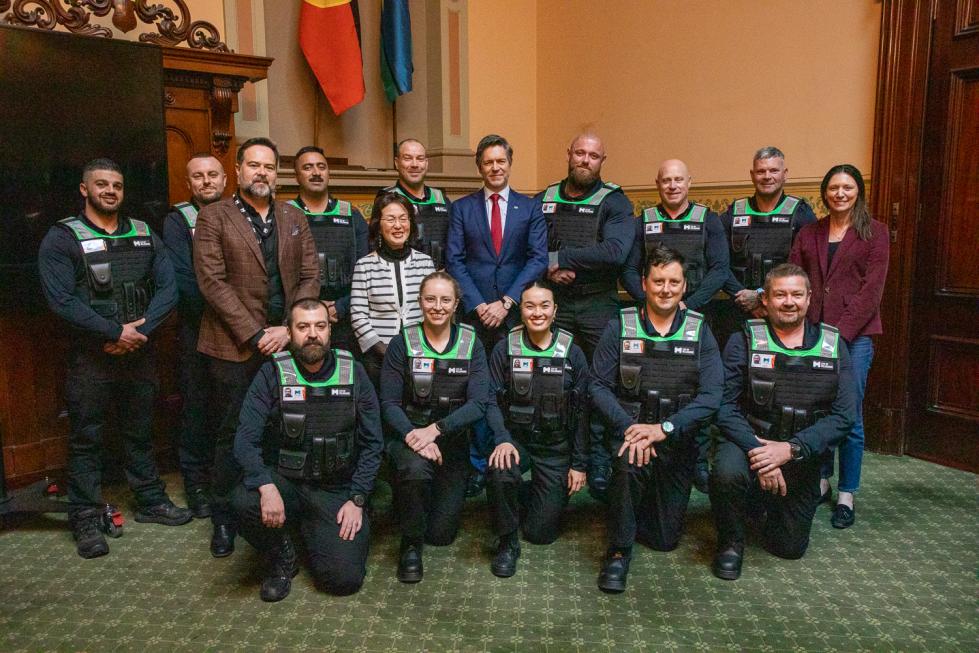
The new team will patrol key hotspots across the CBD – including Elizabeth Street South, Bourke Street and Swanston Street. The Council says they will also be out and about across the entire municipality – seven days a week.
Working in pairs, CSOs will identify and respond to antisocial behaviour, support vulnerable people, and coordinate with Victoria Police when needed, with the program welcomed by Victoria Police.
While CSOs have authority under local and some state laws, they are not police or protective service officers – they focus on support and connection rather than policing. They can issue fines, give directions for certain breaches, and step in to de-escalate situations until police arrive.
All officers have completed training in trauma-informed engagement, mental health awareness, cultural safety, substance use, and family violence awareness.
“Sometimes the right question isn’t ‘What are you doing?’ it’s ‘How are you doing?’ That’s what these officers are trained to do: look out for people, listen, and help them get the right support,” Lord Mayor Reece said.
The program also has a dedicated coordinator who liaises with Victoria Police and local outreach services to ensure anyone in crisis is referred to the right support quickly.
