

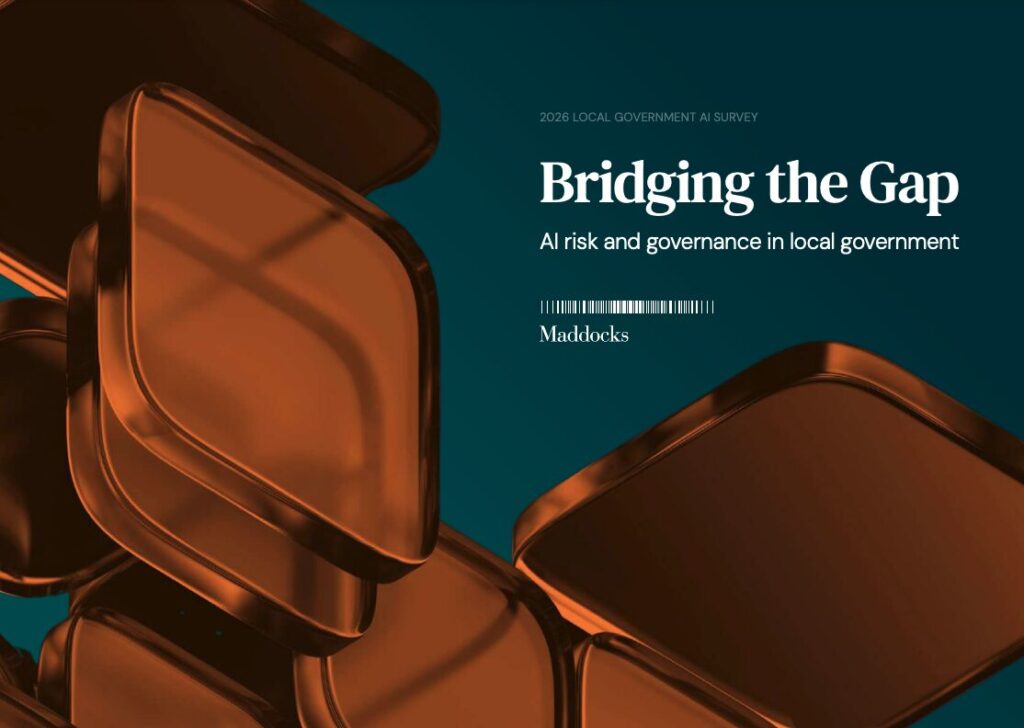
National law firm, Maddocks, has released its Bridging the Gap: AI risk and governance in local government report, which it says has highlighted the growth in Artificial Intelligence (AI) adoption across Australia’s local government sector, while revealing governance isn’t keeping pace with usage.
The report draws on survey responses from over 337 local government officers across 75 councils in Victoria in September and October 2025, with findings further validated through a pulse survey conducted in June.
The report reveals a picture of a sector increasingly embracing AI for individual productivity, while continuing to develop the governance frameworks, policies, and training needed to support broader and more strategic adoption.
According to the report, an average of one-third of respondents across both surveys believed their organisation had a formal AI strategy or governance framework in place, with the remaining two thirds believing it to be in development or non-existent.

Commenting on the findings, Kate Oliver, Partner and Victorian Local Government Sector Leader at Maddocks, said: “The message from the survey is clear: AI is already here, and councils are using it. The challenge is that governance is an area struggling to keep up with the pace of adoption. Without clear guardrails and training, officers are uncertain about how to use these technologies safely and compliantly.”
The report identifies several key themes emerging across the sector, including:
- AI adoption is accelerating, but remains largely focused on individual productivity and everyday tasks;
- Governance and strategy are developing, but still lag behind actual usage;
- Privacy and data protection remain among the most significant concerns for officers;
- Many councils lack a centralised ‘source of truth’ for AI guidance and accountability;
- Officers are eager for legal guidance, practical training and governance support to help them adopt AI responsibly.
The research also found that 74% of respondents see customer service as the greatest opportunity for AI within local government, while many others identified significant potential in data integration, decision support and planning functions.
At the same time, respondents highlighted legal and operational risks including privacy and data protection, accountability for automated decisions, quality of outputs and hallucinations, bias and discrimination, lack of transparency, and procurement and vendor compliance.
The report outlines that councils should focus on converting officer-led experimentation into supported and strategically aligned use of AI. Key recommendations include developing clear AI strategies, establishing governance frameworks, implementing training programs, strengthening procurement oversight and improving communication with staff.
“The next phase of AI adoption is not simply more AI use,” said Ms Oliver.
“It’s better governed and better targeted AI use. Councils that get the balance right will be well placed to realise AI’s benefits while maintaining community trust and meeting their legal obligations.”
Maddocks says the report is designed to help councils understand emerging legal risks and identify practical steps for responsible AI adoption.
Read the 48-page report here.
Maddocks is an Australian law firm that works closely with corporations, businesses and governments throughout Australia and internationally, advising national and international clients across consumer markets, healthcare and technology, infrastructure and development and the education, energy and government sectors.
