
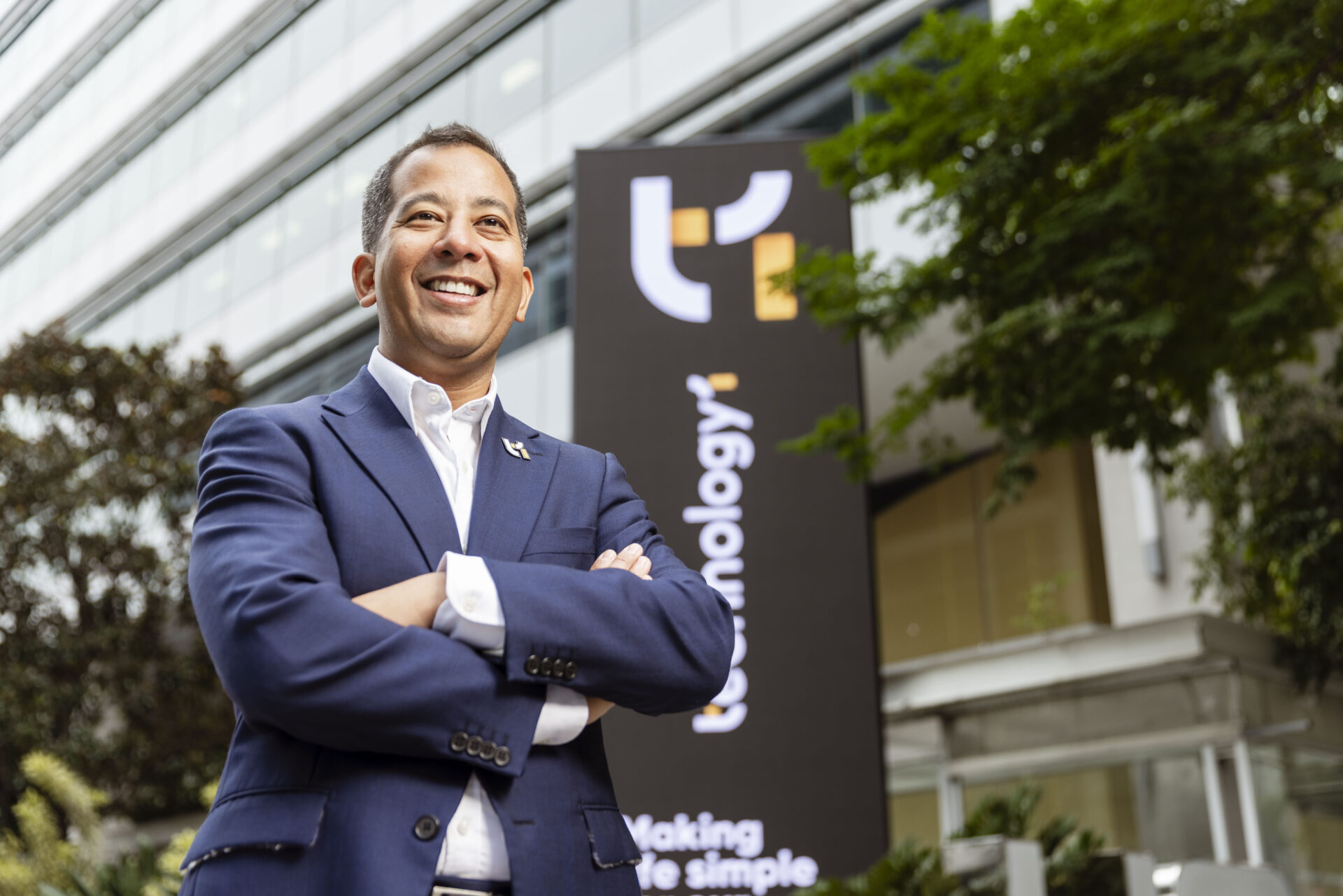
OP ED by Ed Chung, Chief Executive Officer, TechnologyOne.
Prime Minister Anthony Albanese recently did something no Australian leader has done before. His declaration that AI will have such a profound impact on Australia, and the lives of all Australians, that he must personally guide our national response is both welcome and important.
Think about what that means. This is the first time a Prime Minister has said: this technology is so important, will have so much impact on our lives, and represents such a huge opportunity, that it is my responsibility as PM to take personal responsibility. That is a huge statement; and it shows he really understands how important it is that Australia owns its AI destiny, and that AI is accountable to our laws and our values.
Local government is where technology – and its safe and effective application – meets the kitchen table. Rates notices. Development applications. Bin collections. Libraries, pools, parks, pet registrations. Councils hold some of the most personal data in the country, where families live, what they own, what they owe – and they deliver the services people notice first when something goes wrong.
That is why the AI decisions councils make in the next two years matter more than almost anyone realises. And it is why I want to put a proposition directly to the sector: when your council buys AI technologies, buy Australian; and if not, ask why not.
Let me be clear about what I’m not saying. I’m not asking any council to buy an inferior product out of patriotism. As Assistant Minister Dr Andrew Charlton put it earlier this year, the ask is simply that when buyers have in front of them an Australian option, and when the choice is close, lean local.
And if someone – like an overseas consultant – presents a list of offerings that includes no local provider, ask why? Because while there is a thriving, competitive, innovative and fit for purpose Australian AI industry and it is growing rapidly. It just doesn’t get the recognition it deserves.
My reasoning is simple: we can ultimately only control what we own, so we need to support sovereign AI. If we want AI that answers to Australian laws and reflects Australian values, someone in Australia must build it, own it and be accountable for it. Here is why that matters at the local level.
First, your community’s data. Digital sovereignty is not just about where data is stored. It is about who builds the technology, who owns the intellectual property, who pays tax here, who employs Australians, and, above all, who is accountable to Australian law and the Australian community.
When ratepayer data sits with an Australian provider, it is governed by the Australian Privacy Act and never subject to the laws of a foreign government. When something goes wrong, the company answering for it is answerable here, to your regulators, your residents and your council.

Polling consistently shows the thing Australians most want to know about AI is that their data stays in Australia, under Australian control. Councils are better placed than anyone to give their communities that assurance, but only if their procurement choices make it true.
Second, trust. Australians are more anxious about AI than almost any nation surveyed, fewer than a third believe the benefits outweigh the risks. Local government cannot afford to get this wrong, because councils run on social licence. The answer is not to avoid AI; it is to adopt AI that is governed properly. That means human-in-the-loop by design, so technology supports the judgement of your staff rather than replacing it. It means independently certified AI governance, not vendor promises. These safeguards exist today, built into enterprise software already running in Australian councils, and they are precisely what the Government’s new standards will ask of everyone.
Third, capability. There is a persistent myth that buying Australian means settling for less. The local government sector itself is the strongest rebuttal. The councils of more than 83% of Australians already run on enterprise software designed and built in Brisbane, including agentic AI developed by more than 700 Australian engineers, trained on nearly four decades of Australian public-sector experience, not scraped content. Australia’s sovereign AI capability is not a future ambition. Your sector helped build it, and your sector already proves it works.
Fourth, the economics. Analysis published this year suggests only a fraction of 1% of federal procurement reaches Australian technology companies. Every council faces the same pattern on a smaller scale: technology budgets that quietly flow offshore, taking jobs, tax and future capability with them. Every dollar a council spends with an Australian provider is reinvested in Australian R&D, Australian careers and Australian communities, including, very often, in the regions those councils serve. Redirecting spend to competitive Australian options costs ratepayers nothing. It just requires the question to be asked.
So ask it. Three questions belong in every council’s next technology procurement. Where does our community’s data live, and under whose laws? Who is accountable, here, in Australia, if something goes wrong? And is there a competitive Australian option, and if we’re not choosing it, why not?
The Prime Minister says Australia should shape the future of AI rather than be shaped by it. In local government, that isn’t an abstraction. It is a procurement decision; one your council will probably make within the next budget cycle. Choose to own your destiny. The Australian option is already in the room.
Ed Chung is Chief Executive Officer of TechnologyOne (ASX: TNE), Australia’s largest enterprise software company. Its software powers the councils of more than 83% of Australians.
