
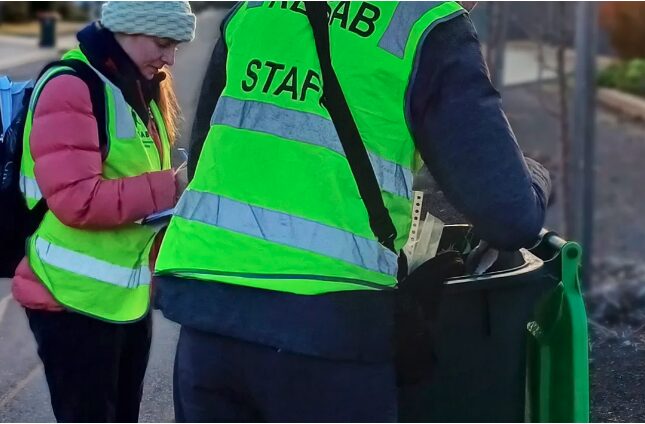
A Keep South Australia Beautiful (KESAB) report has revealed a significant reduction in food going into landfill as a result of a successful community education initiative by The Barossa Council.
Dubbed ‘Bin there, checked that’ and co-funded by Green Industries SA, Council partnered with KESAB for the10-month project to research the best ways to encourage residents to use their green organics bin for all compostable materials, especially food waste.
Mayor, Bim Lange said KESAB Resource Recovery Educators looked in green and red bins awaiting kerbside collection outside nearly 200 households across two towns.
“KESAB visited the same properties four times over the duration of the project and just lifted the bin lids,” said Mayor Lange.
“They provided feedback about what they saw in the form of information leaflets, depending on what was visible in the top few layers of material.”
Sustained improvement in food waste disposal was seen over the course of the program which Mayor Lange described as “a fantastic result”.
“It was important to Council that this approach didn’t make residents feel judged or singled out,” he said.
“This was about educating our community on how they can help increase recycling, which benefits the environment and helps keep waste service costs as low as possible.”
An optional survey sent to participants at the end gauged how the program had influenced change.
“More than half the respondents said they are now putting more food waste in the green organics bin and have become more aware of what food they throw out since the program started,” Mayor Lange said.
“Some told us they had been unaware certain food scraps could go in the organics bin, while others said they used chickens, worm farms or compost bins for food waste when they don’t use a green bin. It’s given us an interesting local insight.”
Keeping all locations confidential, the KESAB report was presented as an information report at the August Council Meeting.
The report will inform Council’s future waste and recycling education initiatives to help lower the impact of the Solid Waste Landfill Levy on service costs, support a circular economy and contribute to a more sustainable environment.
Food and other green organic waste collected from kerbside green bins in the Barossa are processed by Jefferies Soils and made into compost and other mulch products. Council reuses this material to improve soil health and water retention in soils in the Williamstown Main Street and Barossa Park frontages.
