
Ipswich City Council says a new wetland brimming with wildlife and native flora will be the result of a ground-breaking environmental project involving the planting of 30,000 plants.
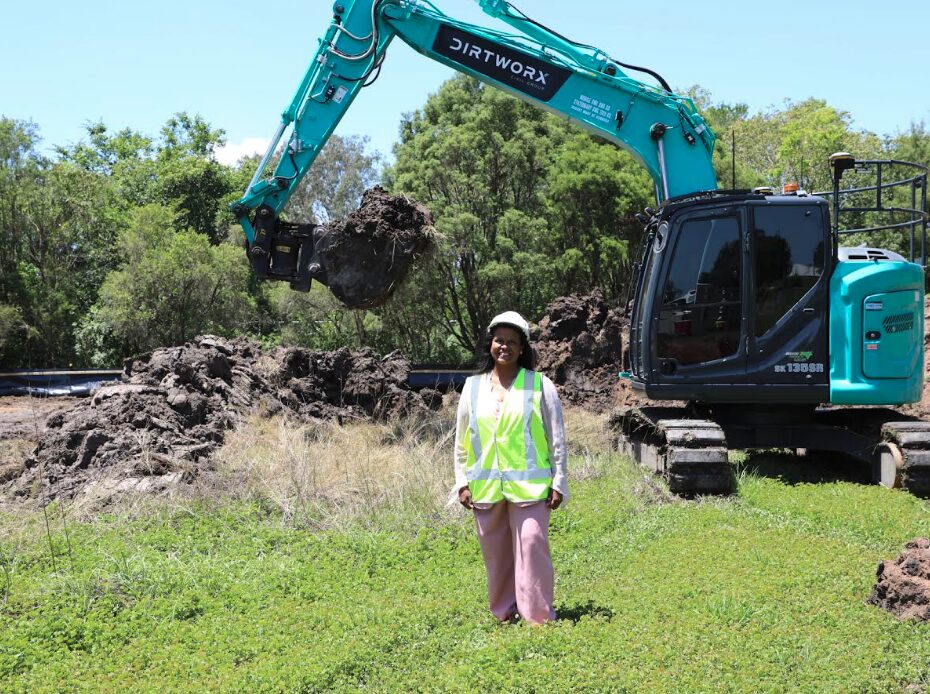
Earthworks are underway to build the Bremervale Wetlands at Bremervale Park in Raceview, the first constructed ephemeral wetland by the Council.
Division 1 Councillor, Pye Augustine (pictured) said the Bremervale Wetlands will improve the waterway health of the adjacent Bundamba Creek.
“Ninety-one endangered Swamp Tea trees are among the 30,000 plants being planted at Bremervale Park in Raceview to form the new Bremervale Wetlands,” Cr Augustine said.
“The trees, Melaleuca irbyana, are the same species which make up the world’s largest protected forest of endangered Swamp Tea tree, which are a stunning, paperbark-clad melaleuca tree, at Purga Nature Reserve.
“As well as enhancing the natural beauty of Bremervale Park, this new wetland will serve important purposes, foremost in creating a diverse ecosystem suitable as habitats for birds, insects, reptiles, amphibians and small mammals.”
Cr Augustine said the reimagined area will be an ephemeral wetland, which are designed to only hold water for a short time after a substantial rain event.
“Most of the time, the ground will be dry. The concept of a dry wetland might seem like an oxymoron, but this wetland has been designed to
filter and absorb pollutants from urban stormwater,” she said.
“It is estimated this ephemeral wetland could prevent as much as 9,900 kilograms per year of sediment and 1.07 tonnes per year of litter entering Bundamba Creek.”
Bremervale Park is highly flood-prone, having last been inundated in 2022.
“The Bremervale Wetlands will improve the health of the Bundamba Creek by regulating stormwater flow velocities and volumes, providing natural filtration and reducing erosion caused by stormwater runoff.”
The wetland area would have a footprint of about 3,500 square metres when inundated – roughly equivalent to half a soccer field.
“Most of the wetland will only have a depth of 30cm to 40cm, with a maximum depth of 1.5m in the sediment pond, which allows the basin to dry out between rain events,” Cr Augustine said.
“This area of Bremervale Park is already relatively flat and boggy, so it will only require minimal earthworks to direct the low flows from the existing stormwater channel into the ephemeral wetland.
“The species of plants such as Lomandra and native grasses have been selected for their natural ability to capture pollutants from stormwater runoff, providing filtration by collecting and absorbing excess nutrients such as potassium, phosphorous and nitrogen.
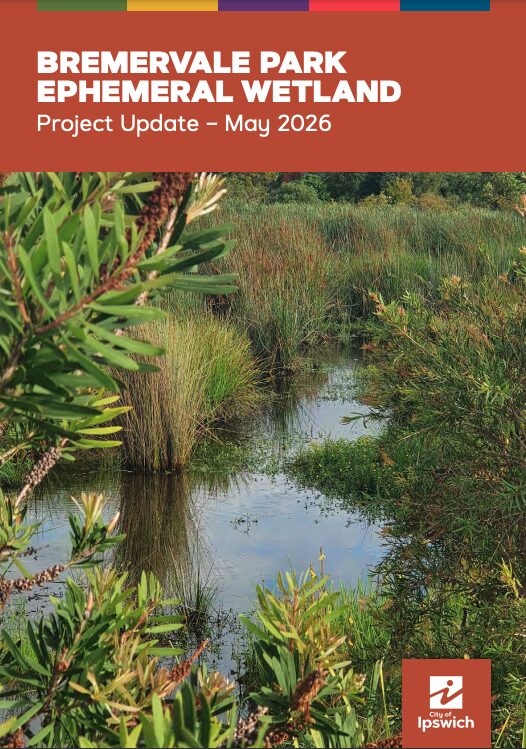
“During dry periods, the area will be a wonderful attraction at Bremervale Park for nature lovers of all age to appreciate and explore.”
The project is being funded by council’s Off-site Stormwater Quality Improvement Program which allows eligible developers to voluntarily pay fees to council in lieu of meeting some, or all, of their statutory responsibilities for reducing stormwater pollution on development sites. Council then uses the fees paid to deliver projects that achieve an equal or greater reduction in stormwater pollution.
For more information on the Bremervale Wetlands, view the Project Factsheet here.
