
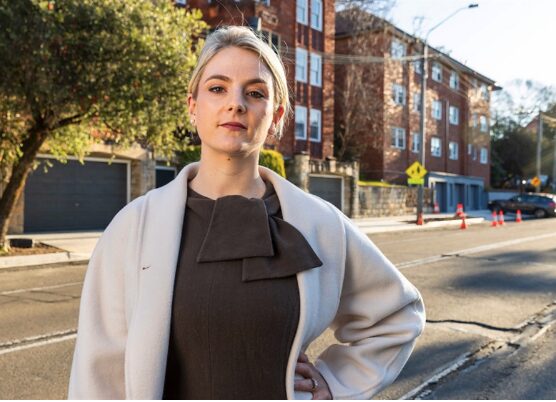
The NSW Government has released its draft rezoning plan to 9,400 new homes in the Sydney eastern suburb of Woollahra.
On public exhibition from today, the draft proposal sets a vision for how the 168-hectares of prime land in Sydney’s east will evolve over the next 20 years.
The NSW Productivity Commission has deemed Woollahra the most feasible Local Government Area in NSW to build new housing but says housing approvals in Woollahra consistently lag well behind other LGAs.
The Government’s proposal will concentrate new development around the existing Edgecliff station and the new station at Woollahra, with up to 40% of new dwellings to be located within 200 metres of a train station.
“For the last decade, we’ve asked a small number of communities to carry the lion’s share of Sydney’s housing growth while other parts of the city have barely changed,” said Premier, Chris Minns.
“We can’t keep pushing all of Sydney’s growth to the west and the urban fringe while established suburbs close to jobs, transport and services are locked away from new housing.
“We’re not asking Woollahra to solve the housing crisis on its own. We’re asking Woollahra to make a fair contribution, just as we’re asking communities right across Sydney to do.”

Key features of the proposal include:
- Varied buildings heights of up to 34 storeys around Edgecliff Station and 32 storeys around Woollahra Station;
- Plans for 7 new parks and up to 9 kilometres of new walking and cycling connections;
- A requirement for diversity of new homes – including studio, one, two and three-bedroom apartments;
- 3 percent affordable housing contribution, with up to 15 percent applied to certain sites in perpetuity;
- An expanded mixed-use Edgecliff Centre and a new Woollahra local centre, delivering around 1,000 new local jobs, services and amenities.


The Government says the proposal strikes the right balance of greater density without sacrificing liveability, with approximately 3.5 hectares of new and upgraded open space planned across 13 parks, a new Edgecliff plaza, and a commitment to make sure there is no net loss of overall tree canopy within the precinct.
It says 95% of the proposed new homes will be located within 400 metres of open space of 3,000 square metres or larger.
It also says the proposal recognises the importance of protecting the area’s heritage, with heritage items retained and carefully integrated into the design of the surrounding area.
Woollahra Council says the Government’s plan falls short in many areas, including in relation to supporting infrastructure and heritage protections.
Last month the Council released an Alternative Approach which it says is based on liveability and good urban design, while still accommodating substantial population growth.
Mayor, Sarah Dixson described the Government’s rezoning plan as “a dystopian nightmare in-waiting”.
“Their ‘build it and they will come’ position doesn’t acknowledge the critical factor in creating greater housing supply – price – and it fails to address available space, the question of land acquisition and necessary local infrastructure for such a massive uplift. Council’s approach would still ensure additional housing growth is accommodated, while protecting local amenity and heritage,” said the Mayor.
“The state-led rezoning is a pretty bleak approach and a complete abandonment of good urban design and planning principles, especially when 57% of the rezoning area falls within existing heritage conservation areas.
“We recognise that we must all work to create more homes. If the government is serious about keeping people in Sydney, it needs to make a reasonable and more affordable commitment.”
The Council says its Alternate Approach for the area accommodates up to 3,600 dwellings and is based on transport, economic feasibility, social infrastructure and urban design studies and comprehensive technical investigations which address the precinct’s environmental, transport and infrastructure constraints while maintaining the qualities that define Woollahra and Edgecliff.
“While it seems that the government left its planning department to reverse-engineer the placement of 10,000 homes following its rezoning announcement, Council’s alternative approach seeks to build on existing qualities and character and considers the need for public open space, transport capacity and social infrastructure,” said Mayor Dixson.
“We have done the work the government should have completed well before making its rezoning announcement to ensure a more realistic, sensible and viable solution.
“Future generations will be priced out of Sydney, essential workers won’t be able to afford to live locally and our residents have serious concerns about tree canopy loss, wind tunnelling, loss of solar access, heritage and local character, and well-founded fears that already congested streets will only get worse, and it will be harder to find school and childcare places and open spaces for play and exercise. All the things that make a place liveable.
“We’re expecting the only people who will be excited about 10,000 high-rise luxury apartments in Woollahra and Edgecliff will be developers.
“If the government is serious about planning for future growth and housing affordability in Sydney that is based on evidence and not politics, then it would be well placed to give our alternative thorough consideration. It’s not too late for a better solution.”
The NSW Government’s proposal is on public exhibition from 8 September to 5pm 7 October 2026. Members of the community can submit their feedback via the NSW Planning Portal. For more information and to register, visit NSW Planning.
View the Council’s Alternative Approach(PDF, 54MB).
